

Mother Nature Did Her Accounts. The UK Is Overdrawn.
Opinion & views | Reading time: 5 minutes | Topic: Earth Overshoot Day, Climate Justice, Ecological Debt
It was bucketing with rain on the night of 18 February, the kind of rain that makes you question your decision to leave the house.
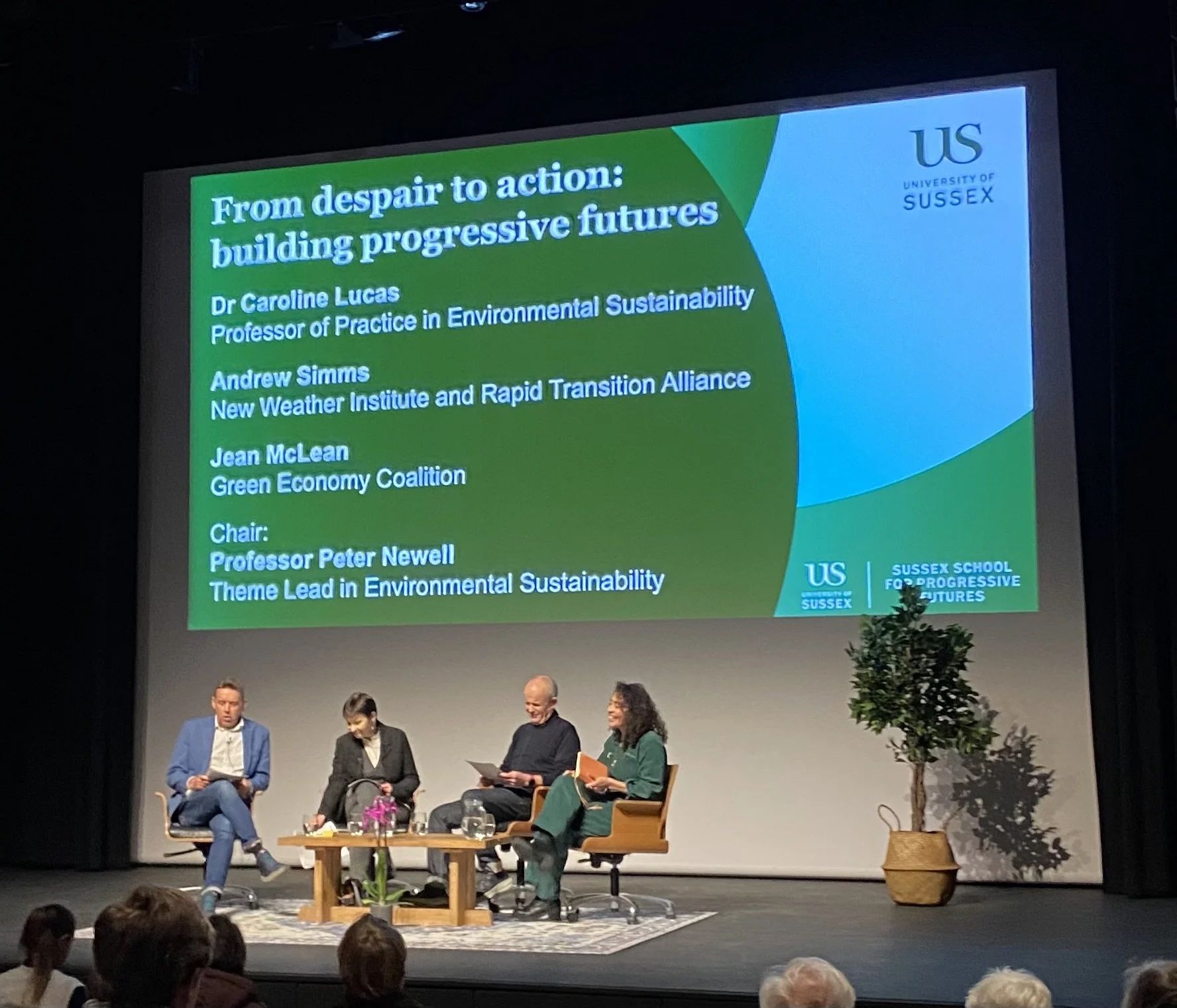
I went to the Attenborough Centre at the University of Sussex for a panel discussion called From Despair to Action: Building Progressive Futures.
Dr Caroline Lucas was on stage alongside Jean McLean of the Green Economy Coalition, chaired by Professor Peter Newell.
And there was a third panellist: Andrew Simms, co-director of the New Weather Institute and research associate at Sussex's Centre for Global Political Economy.
I'd been interested in Earth Overshoot Day for years. I thought about it every year, brought it up in client work and conversations regularly. What I hadn't known, until that damp February evening, was that Andrew Simms is the person who invented it.
He was sitting right there in the room.
Good moment.
So: what is it?
Earth Overshoot Day is the date each year by which humanity has used more from nature than the planet can regenerate in twelve months. The calculation: take the planet's biocapacity (what ecosystems can renew), divide by humanity's ecological footprint (what we consume), multiply by 365. After that date, we are in ecological overdraft. Everything we use from here is borrowed from a future the planet hasn't produced yet.
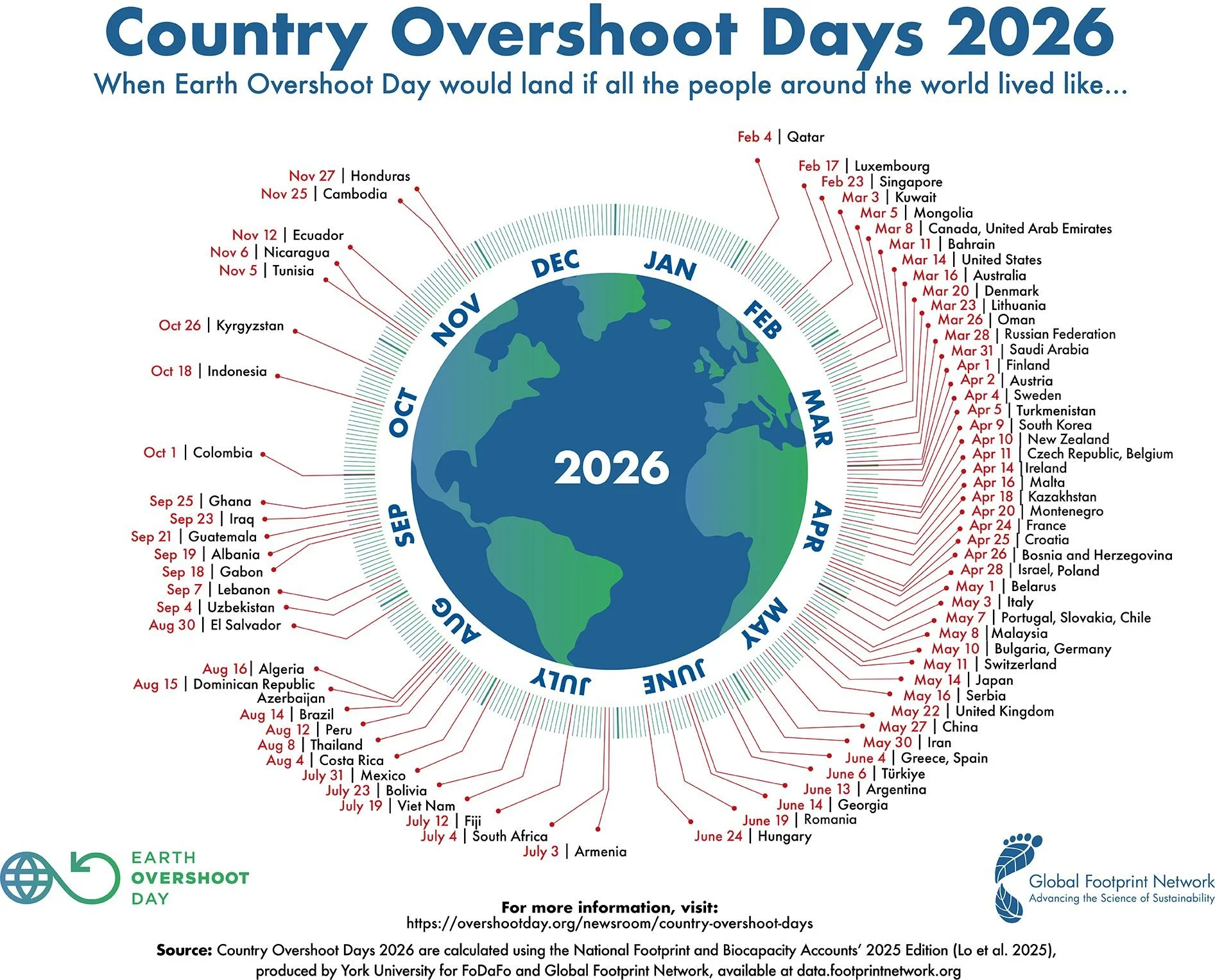
Earth Overshoot Day is calculated per country. Today, 22 May 2026, is the UK's Earth Overshoot Day. And then a Global Earth Overshoot Day will be announced on June 5 (that’s World Environment Day, not for nothing). Last year it fell on July 24th.
In 1971, the global date was 29 December. Humanity was still, just barely, living within its means. By the mid-1970s we had crossed the line. Since then, the date has crept steadily forward, and humanity is now using nature 1.8 times faster than ecosystems can regenerate. If everyone on Earth lived as the average person in the UK does, we would need 2.4 planets.
For me, that framing shifts scale in a way very few things do. Today is an ordinary Thursday in May. It is also the day the UK goes into planetary overdraft.
It started as "Ecological Debt Day" for a reason
Andrew Simms didn't call it Earth Overshoot Day at first. He called it Ecological Debt Day, which makes a lot of sense.
He was Policy Director at the New Economics Foundation at the time, writing about ecological debt as a political and economic idea: the argument that wealthy nations consume far beyond their fair share of the Earth's resources, while the costs are borne by people who didn't do the consuming. His 2005 book, Ecological Debt: Global Warming and the Wealth of Nations, puts the case with characteristic directness.
"Obliviousness to ecological debt," he writes, "is characteristic of an economic system in which the interests of finance come first and which fails to recognise the environmental foundations of prosperity."
In 2006, NEF partnered with the Global Footprint Network (which holds the underlying methodology, developed by Mathis Wackernagel at the University of British Columbia in the 1990s) to take the campaign global under the new name Earth Overshoot Day.
The Sussex connection runs deeper than Simms alone. Dr Caroline Lucas, also on the February panel, joined the university in October 2025 as Professor of Practice in Environmental Sustainability at the Sussex School for Progressive Futures. After 14 years as MP for Brighton Pavilion and 10 years as MEP, she chose to step down from Parliament and bring that experience into the university instead. She has been running workshops with students on how political and social change actually happens in practice, drawing on decades as an activist as much as her parliamentary career. As she put it in June 2025:
"It is not good enough to tinker with the status quo. We must reprogramme our economy so that it works for everyone." Dr Caroline Lucas
There's something worth noticing about a university that is home to both the person who named the problem and one of the most persistent voices in UK politics demanding we actually solve it.
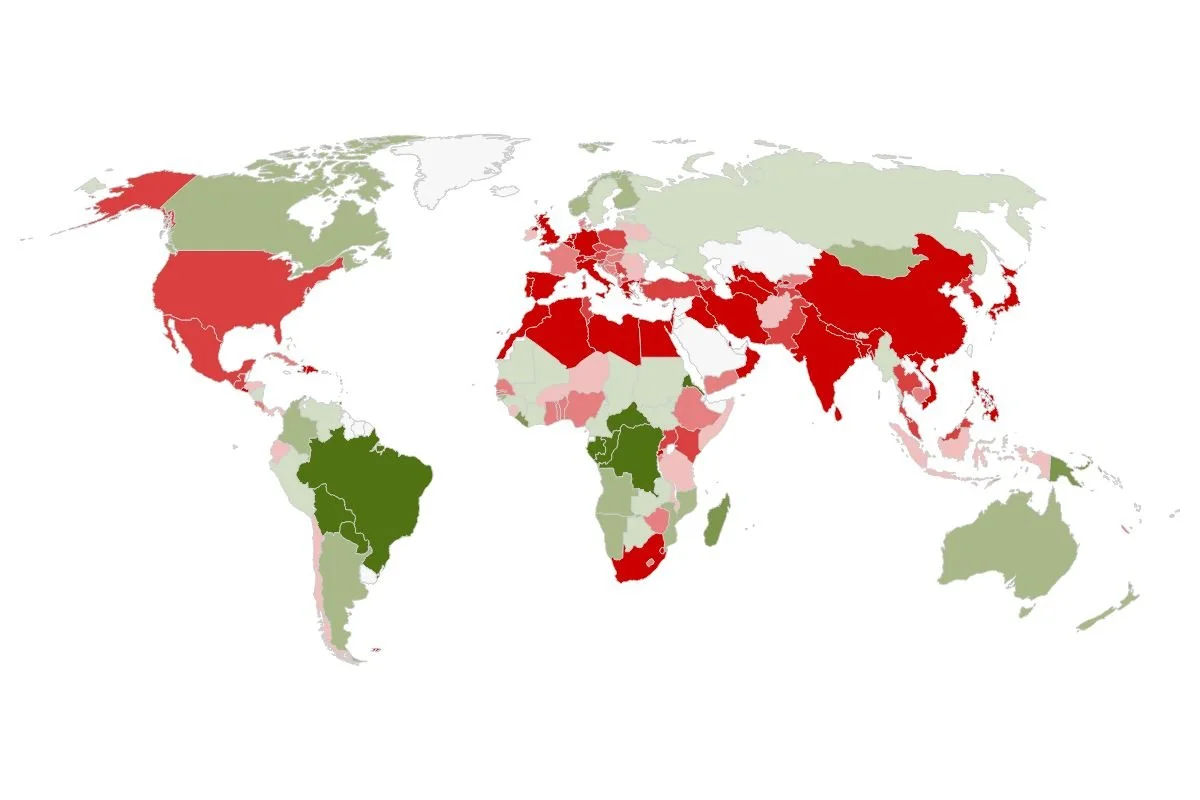
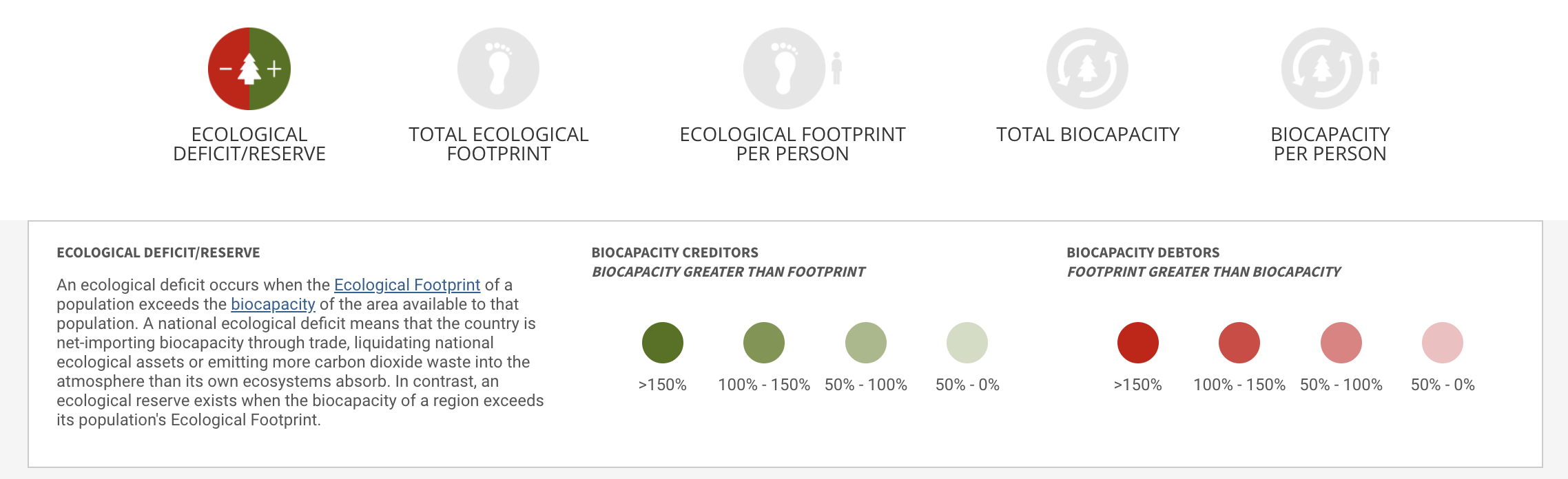
Click through to the interactive map (it’s very fun).
The maths is political
Here is what Earth Overshoot Day does that no amount of rhetoric manages quite as efficiently: it describes the situation without making an argument. The accounting is neutral. The politics are right there in the data.
The UK reaches overshoot today, in May. Qatar reaches it in February. The United States in March. Many countries across the Global South don't reach overshoot at all, because their per-person consumption is a fraction of ours. This is climate justice expressed as a number.
Jason Hickel makes this case precisely in Less Is More: How Degrowth Will Save the World:
"Virtually all of this overshoot is being driven by excess consumption in high-income nations." Jason Hickel
He goes further, arguing that degrowth in the Global North is a form of reparations, a restoration of the commons that wealthy economies have been drawing down for decades. The "debt" in Ecological Debt Day was never metaphorical. Simms meant it literally. The ledger is real. The people paying it are not the ones who ran it up.
The good news is darkly funny
The rate at which Earth Overshoot Day moves earlier has slowed considerably. In the 1970s, the date crept forward by around three days per year. In recent years, the average has fallen to less than one day. Renewable energy, policy shifts, changes in how some economies measure growth: something is working.
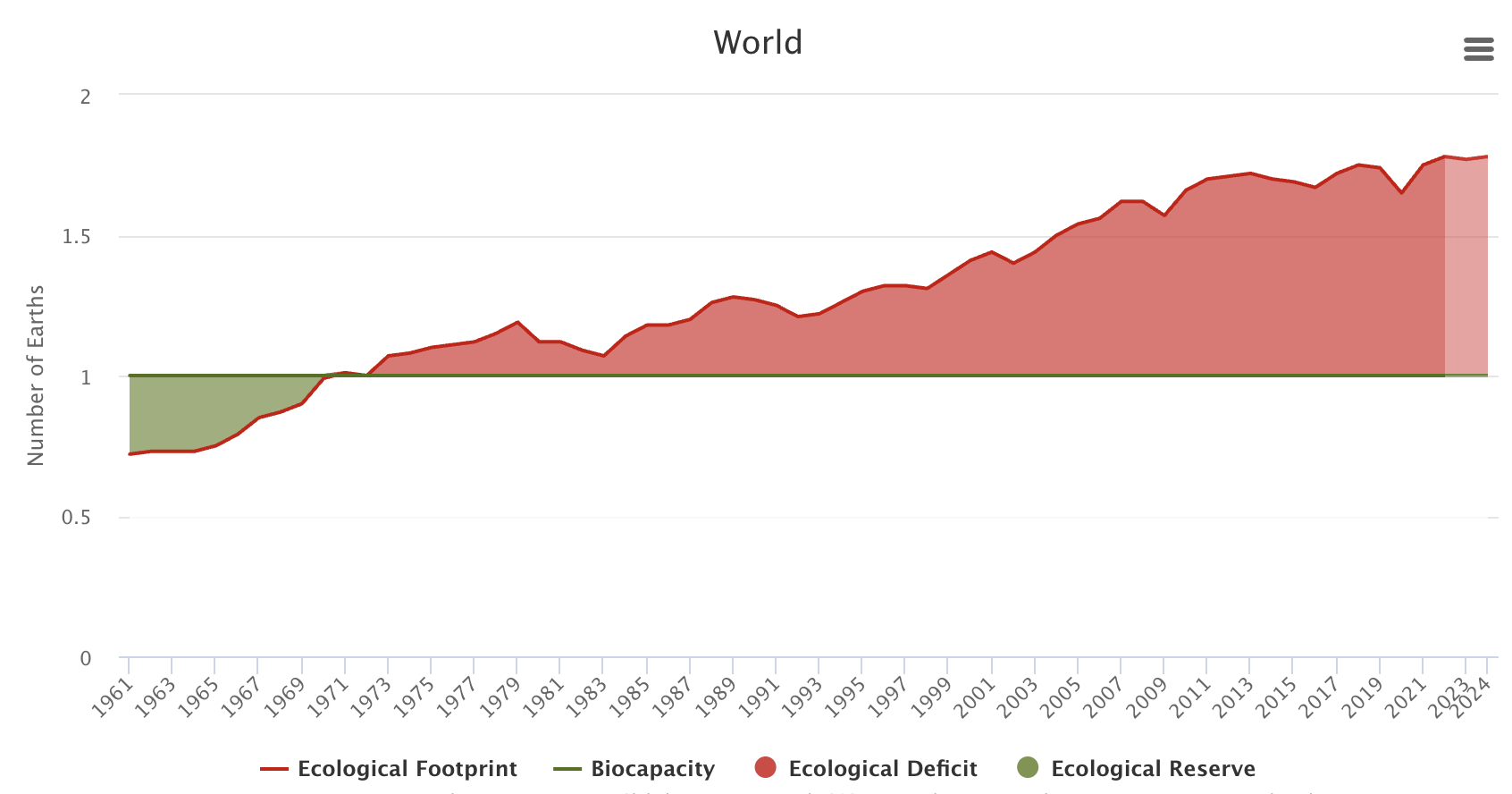
We were racing toward a cliff. Now we are walking briskly toward a cliff.
I find this both hopeful and absurd, particularly given that the February panel was explicitly about hope and how you sustain it when the situation is serious. Dr Caroline Lucas, Andrew Simms, and Jean McLean weren't pretending we were fine. What they offered wasn't comfort. It was something more useful: the idea that hope doesn't come first. Action comes first, and the hope arrives with it.
Jean McLean put something well that evening: the narratives that keep us passive, individualism, fatalism, the sense that the powerful are simply too entrenched to challenge, are tools. They function to prevent solidarity. They are not facts about the world.
Start somewhere
Today the UK has spent its ecological budget for 2026.
I've been thinking about that date for months, since February actually, since a rainy evening in a lecture theatre where it clicked into place in a new way. Not because learning it there changed the number. Because context changes what you do with a number.
Earth Overshoot Day is a way of seeing. Once you know it, the calendar looks different. The ordinary looks different. That, in my experience, is usually where things start to shift.
Look up your country's overshoot day at overshootday.org. Then decide what you want to do with it.
Sources
Earth Overshoot Day
Andrew Simms and the New Economics Foundation
Andrew Simms: The Ideator of Earth Overshoot Day — Global Shakers
Ecological Debt: Global Warming and the Wealth of Nations — Pluto Press, Andrew Simms
Jason Hickel
Less Is More: How Degrowth Will Save the World — jasonhickel.org
Degrowth Is About Global Justice — Green European Journal
UK data
UK's Earth Overshoot Day — Simply Sustainable
Our ecological footprint — WWF-UK
Sussex School for Progressive Futures
From Despair to Action: Building Progressive Futures — Attenborough Centre, University of Sussex
From Despair to Action: Building Progressive Futures — Green Economy Coalition
Inspiring change-makers: Caroline Lucas brings students together — University of Sussex